Studio Yablonska
Designing for Calm: The Art of Nervous-System-Safe Spaces
12/23/25
Because beauty without calm isn’t luxury — it’s noise.
We live in a world that glorifies movement.
More light. More sound. More doing.
And the new currency? Attention.
But the body can only expand when it feels safe.
For me, safety is the new luxury.
Restorative design begins with a simple truth:
Your home is a living reflection of your nervous system.
When space is cluttered, the mind echoes that noise.
When design finally has permission to breathe, the body softens.
It’s a quiet case for why environment matters so much.
Your surroundings aren’t passive — they’re living participants in your state of being.
Every surface, every shadow, every texture is in conversation with your body.
The space either asks you to brace… or invites you to let go.
Every detail — from materials to light flow — is chosen to help the body find homeostasis.
That exhale.
That gentle shoulder drop we forget we’re missing.
What Is a Nervous-System-Safe Space?
It’s a space designed to regulate, not perform.
A home that feels like an ally — not a stage.
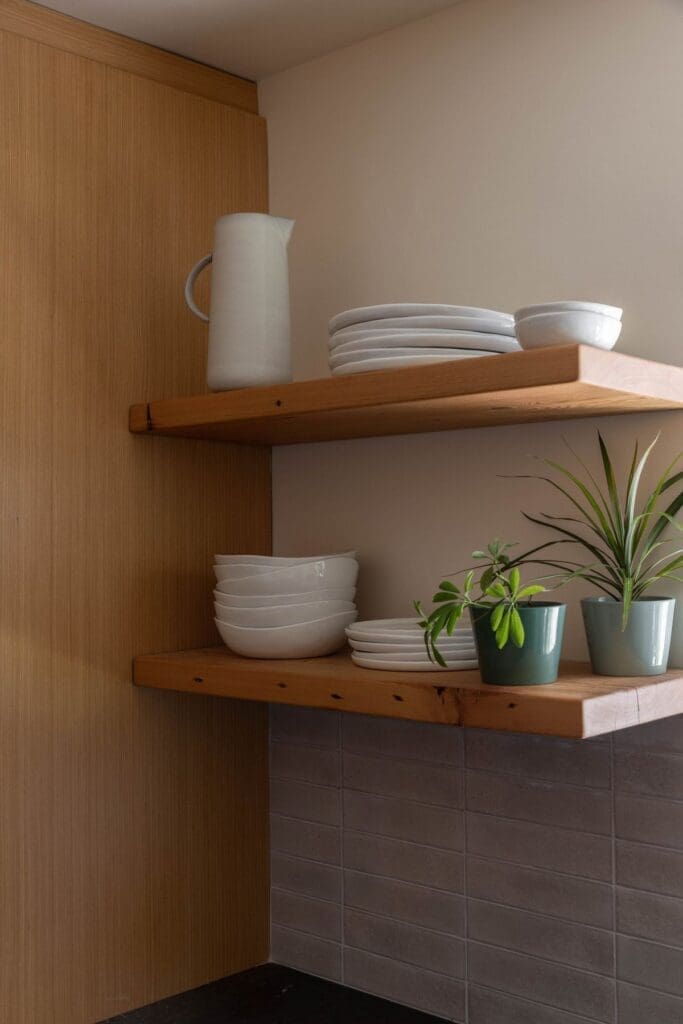
Soft, diffused light replaces the kind that hums behind your eyes.
Natural textures ground the senses.
Flow and proportion create ease as the body settles into the spaciousness those elements allow.
Environment becomes an ally — quietly working beneath awareness to guide the body into balance.
It’s not just aesthetic. It’s biological harmony.
Your home becomes the pause between heartbeats — the space where your system remembers peace.
Why It Matters
Traditional design chases visual perfection.
Restorative design cultivates energetic coherence.
It asks: Does this space hold me?
Does it let me breathe?
Because when your environment mirrors calm, your body stops bracing.
Stress dissolves.
Creativity returns.
Presence expands.
Environment is the invisible architecture of emotion.
The home you inhabit is constantly shaping how you think, feel, and connect — whether you notice it or not.
When that environment becomes a sanctuary, your nervous system learns a new baseline: peace.
That’s the quiet magic of a nervous-system-safe home — it doesn’t shout your style; it transmits your serenity.
When a Space Begins to Listen
Every home has its own heartbeat.
You can feel it — the pause between rooms, the stories caught in corners, the way light moves like memory across a wall.
When I begin a project, I start there — listening for what the space wants to become.
Not from color swatches or Pinterest boards, but from energy, lineage, and lived experience.
Design, then, becomes translation —
a way of giving language to what the body already knows it needs: rhythm, safety, belonging.
Form follows feeling.
Luxury follows safety.
Beauty becomes biology.
When calm is designed with intention, a home stops being a backdrop.
It becomes a sanctuary — alive, resonant, restorative.
The Future of Luxury Is Nervous-System Resonance
True elegance isn’t found in excess; it’s found in restoration.
The most sophisticated spaces are the ones where you can hear yourself think again.
Where your breath slows.
Where the light feels like kindness.
It’s the hush of letting go rather than the hum of reactivity.
Your home should hold your nervous system the way cashmere holds warmth: effortlessly, beautifully, without demand.
This is the next evolution of luxury — where design becomes devotion, and calm becomes currency.
For those attuned to beauty that restores and spaces that breathe — welcome home.