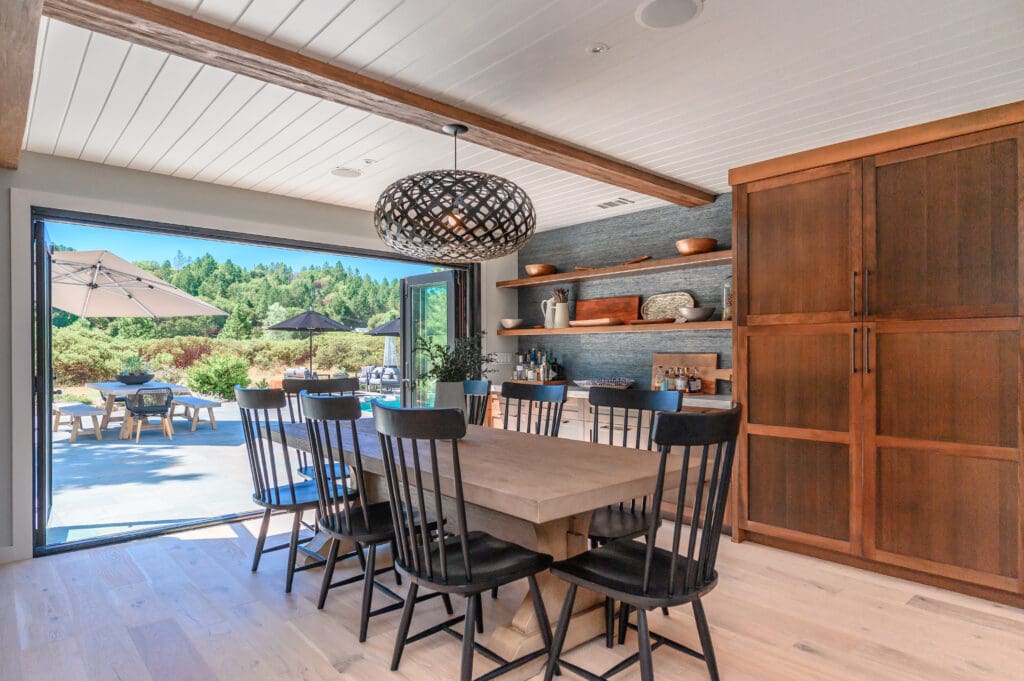
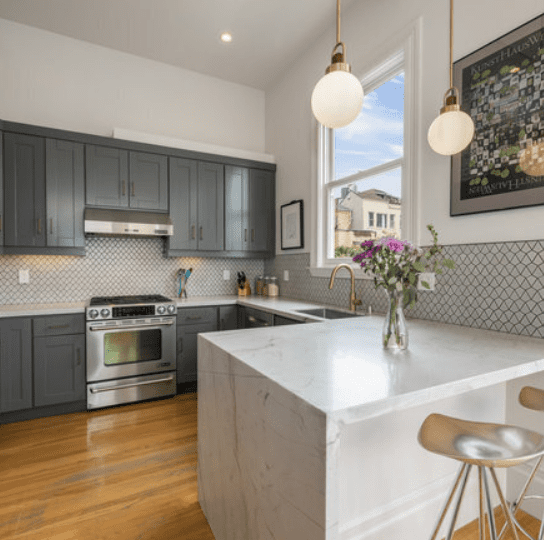
Why a house that looked perfect during the showing can feel completely different once real life moves in.
Rooms designed for gathering reveal their purpose the moment people are lived in.
A client once said something to me that I’ve heard, in one form or another, many times.
“When we toured the house, it was staged beautifully. Everything felt perfect.
But when we moved in and tried to recreate it with our own furniture, it all fell apart.
Suddenly there wasn’t enough seating in the living room. There was nowhere for the kids’ things to go. And somehow the rooms that felt spacious during the showing started to feel tight.
I remember thinking… did we buy a lemon dressed like lemon meringue?”
The house itself, of course, wasn’t the problem.
And neither was the staging.
Staging is designed to create an emotional experience. It shows the possibility of a home. Furniture is carefully selected to photograph well and to keep rooms feeling spacious during a short visit.
During a showing, people rarely sit on the sofa or pull up a chair at the dining table. They move quickly from room to room.
Which means they never quite feel the scale of the furniture in relation to their own bodies — whether a sofa is actually too small to comfortably seat a family, or a dining table too large for the room once real life begins unfolding around it.
But once people move in, something else happens.
The house begins to reveal itself.
Suddenly the seating isn’t quite enough. The storage disappears. Rooms that felt generous during the showing begin to feel tight.
Not because the house is flawed.
But because living in a home asks far more of it than walking through it.
What most homeowners don’t realize is that many houses are planned in a sequence that prioritizes architecture and aesthetics first — and daily life second.
There is, of course, a program behind the build — bedrooms, bathrooms, square footage, adjacencies. But even that program is often considered from an outside-in perspective.
The structure comes first. The life inside it is fitted later.
And that sequence doesn’t always serve the people who ultimately live inside the home.
Because the real life of a home doesn’t begin with the exterior envelope.
It begins with the people inside it.
How they gather. How they cook. How they rest and recharge. How they work. How they move through their day.
When those lived patterns are considered last, even beautiful architecture can unintentionally constrain the way a home actually functions.
But when a home is designed around real life, the conversation changes.
Instead of asking how a room should look, we begin by asking how it should be lived in.
Designing around real life means thinking about how people move, cook, and share space together.
A kitchen that allows you, your partner, and your kids to all contribute to dinner — music playing, ingredients spread across the counter, the stories of the day unfolding.
A quiet corner designed for reading or a snuggle. Comfortable, soft, and inviting enough for a skin baby or a fur baby to tuck in beside you.
A laundry room that doubles as a retreat — light-filled, wallpapered, a cozy-chaired “Lady Lair” that mysteriously repels anyone allergic to chores while beckoning you in with noise-canceling headphones, a podcast, and a little well-earned time to yourself.
When a home is planned around moments like these, something subtle but important happens.
The house stops being a collection of rooms.
It becomes a place that supports the rhythms of your life.
And that’s the difference between a house that simply photographs beautifully…
and a home that truly works.
When clients come to me early in the process — before finishes, before furniture — this is where we begin.
We start with how the home needs to function.
Understanding how the home needs to function before design decisions start locking into place.
If you’re planning a remodel or building a home and want to begin there, you can learn more about the Strategic Design Edit here.