Studio Yablonska
Restorative Interior Design: Designing Homes That Support the Nervous System
1/12/26
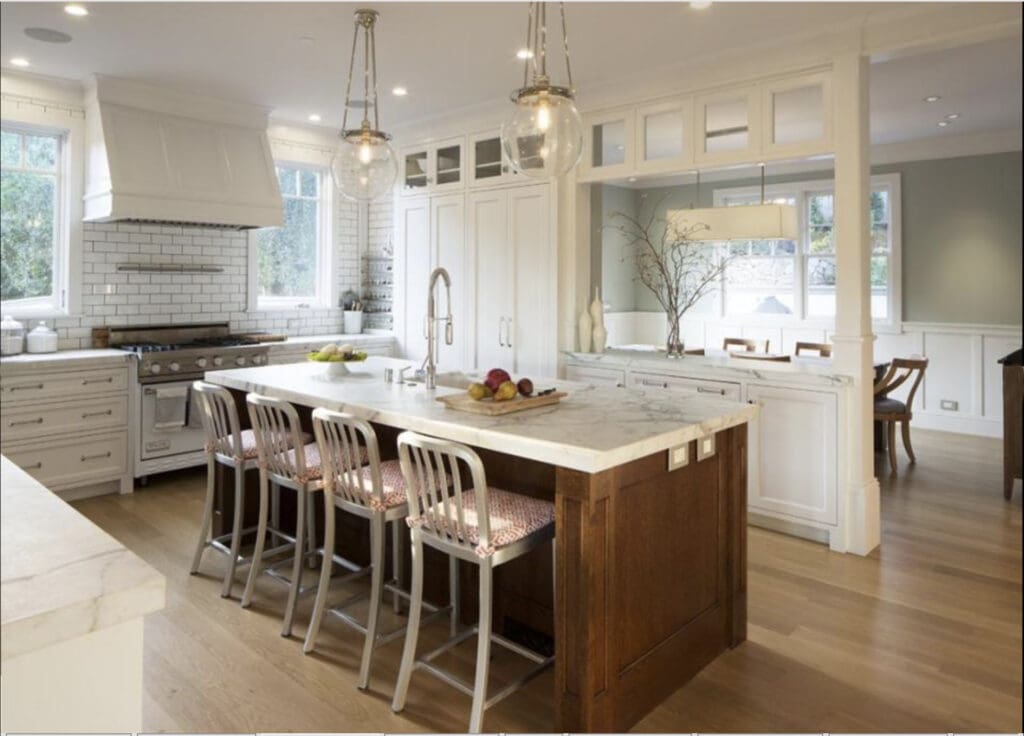
San Anselmo, California.
Designed by Andi Yablonski and Heather Madden, co-founders of Maya Design Studio.
Design has always been a conversation between people and place.
What the client wants.
What the architecture offers.
And how the two come into dialogue.
Over time — and through hundreds of lived-in homes — I’ve learned that there’s a third voice in that conversation: the nervous system.
Same Designer. Deeper Work.
Twenty-two years ago, as a fledgling designer, I landed an internship that grew into a job — one that trained me, forged me, and eventually set me free.
What I loved most about that first firm was how they defined design:
What does the client want — and how does the architecture speak to those desires?
That framing stayed with me.
And I haven’t moved away from it.
If anything, I’ve spent the last two decades deepening it.
Over the years, I’ve designed homes through expansions, relocations, growing families, grief, ambition, recovery, and reinvention. I’ve worked with clients who were clear about what they wanted — and many who weren’t, yet still knew something in their homes wasn’t working.
Over that time, the container has evolved as well.
Tanner Hale Design — named in an earlier chapter of my life — quietly became Studio Yablonska. Not as a reinvention, but as a return. A name that could hold lineage, authorship, and the full scope of the work as it matured.
As I’ve grown — personally and professionally — and as I’ve done my own inner work, I started to geek out on how our brains actually function. How we adapt to change. How we process our environments. How much invisible labor our nervous systems are doing just to get us through the day.
And slowly, unmistakably, I began to see the connection.
Interior design doesn’t just shape how a home looks.
It shapes how we cope. How we regulate. How much we have to hold.
A small, very real example from my own life makes this tangible.
My partner leaves his socks on the bedroom floor. Daily.
Everything else makes it to the hamper. But those two socks remain — right there on the floor, mocking me with their carefree presence.
To him, it’s harmless.
To my nervous system, it’s not.
It’s one more thing I have to register. One more unfinished loop. A tiny distraction my brain can’t quite release — no matter how insignificant two pieces of wool might seem.
It’s not about the socks.
It’s about what they represent.
A moment of friction.
A signal to stay alert.
One more thing to manage.
This is how environments speak to us.
Not loudly. Not dramatically.
But through accumulation. Through repetition. Through the subtle, daily cues that either allow the body to soften — or keep it just slightly on edge.
Multiply that feeling across lighting, layout, storage, circulation, sound, texture — and it becomes clear why some homes feel calming, while others quietly exhaust us.
This realization didn’t pull me away from my original design philosophy.
It brought me closer to it.
The question is still: What does the client want?
But now it’s paired with another:
What does their nervous system need in order to feel supported, steady, and at ease — especially during seasons of change?
That is where my work sharpened.
Not away from beauty.
But toward regulation.
Toward homes that don’t just reflect who we are — but actively support how we live, recover, and move through real life.
Studio Yablonska hasn’t become something new.
It has simply named what has matured.
Design that restores.
Homes that support real life.
Work shaped by experience, care, and the quiet intelligence of the body.
