Studio Yablonska
The Floor Plan Wasn’t Wrong — It Was Unfurnished
3/12/26
Why Furniture-First Thinking Changes Everything in a Remodel
Two design teams had already reviewed the plans.
On paper, everything technically worked. The rooms were generous. The layout checked the boxes. The priorities had been addressed.
But something still felt… off.
That’s when I was brought in to review the layout before the next client presentation — a fresh set of eyes to ensure the space truly supported how the family wanted to live.
And whenever I review a floor plan, I don’t begin by moving walls.
I begin by placing furniture.
Why Furniture Comes First
Before I borrow square footage from one room to enlarge another, I need to understand how that shift will affect real life inside the home.
Where does the bed land?
How does circulation flow?
Is the bathroom generous — or just large?
Does the closet function… or simply exist?
Floor plans can look efficient and impressive on paper.
But until furniture is placed, they are theoretical.
Scale isn’t about square footage.
It’s about proportion in use.
The King Bed Problem
In this particular home, all three bedrooms could comfortably hold king-size beds.
Technically? Impressive.
Practically? Unnecessary.
Children — even when planning for teenage years — need at most a queen. More likely a full. Designing every bedroom to feel like a primary suite inflated the footprint without improving the lived experience.
Once we sized the furniture appropriately for the family’s actual needs, clarity emerged.
Not every room needs to perform at the same level.
That understanding created room to reposition.
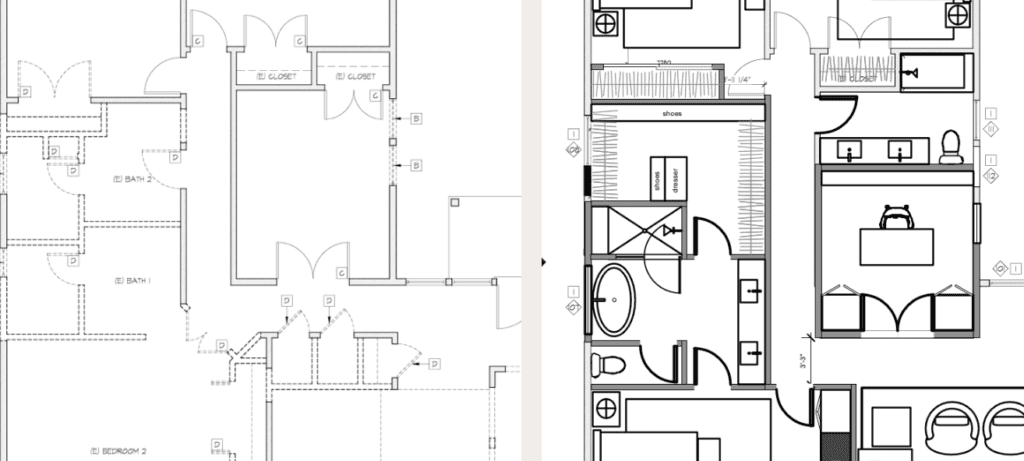
What Changed (Without Changing the Footprint)
The exterior walls stayed exactly where they were.
But inside, everything shifted.
• A real walk-in closet
• An enlarged children’s bath — with storage for days
• Smaller (and more appropriate) bedrooms
• A primary suite that lives like a luxury getaway
• A spa-style bath — no appointment required
Nothing dramatic.
Just intentional.
And that’s often the difference between a renovation that looks good and one that feels right for decades.
Approving Plans vs. Designing Homes
Many renovation plans are approved because they technically work.
But thoughtful interior architecture asks a different question:
How will this space hold you?
Will it support your routines?
Your stage of life?
Your need for restoration at the end of a long day?
Full-scope interior design begins long before finishes are selected. It begins with scale, proportion, and lived reality.
Especially in high-investment remodels across the San Francisco Bay Area — where square footage is valuable and architectural collaboration is essential — early plan calibration prevents costly regret later.
Begin With Understanding
Space doesn’t always require more square footage.
It requires understanding.
If you’re planning a remodel in the Bay Area, begin with a Strategic Design Edit — the first step toward a plan you won’t second-guess.